The face we present
Grooming divides into what keeps a body in working order and what is done to be seen. The two are sold with the same language and measured against the same vague promise, and confusing them is how a routine becomes an obligation.
 Go Back
Magazine
Grooming divides into what keeps a body in working order and what is done to be seen. The two are sold with the same language and measured against the same vague promise, and confusing them is how a routine becomes an obligation.
Text
Naomi Bregman
Date
Read
8 mins
Beauty

Date
Read
8 mins
Share


There is grooming that maintains a body and grooming that presents one. The first is finite, dull and reasonably well evidenced. The second is performance, which is ancient, legitimate and nothing to apologise for. The industry has an interest in keeping the categories indistinguishable, and it is at the point where they blur that a routine stops serving the person carrying it out.
Maintenance is a short list. Sunscreen, which has better evidence behind it than almost anything else sold in the category. Teeth. Keeping the skin barrier intact, which mostly means washing less aggressively than instinct suggests and putting something bland back afterwards. Nails cut. The list is unglamorous, it does not expand year on year, and a person who does only this will be, by any medical measure, fine. Performance is the other tradition, and it is far older than the products. Greek and Roman stage masks were carved with exaggerated mouths and heavy brows because a face must be readable from the back of an amphitheatre, and everything about them was designed for distance. Kabuki kumadori paints the lines of the muscles rather than the muscles themselves. Contemporary makeup does the same work at closer range, and video calls have returned the problem to something close to theatrical, since a compressed image at low light needs its features drawn back in. What has changed is the description. A retinoid is sold as hygiene, a ten-step evening sequence as health, an acid as something the skin needs rather than something a person has decided to do. The vocabulary of care has been fitted over the vocabulary of display, and the effect is that the performance can no longer be declined without seeming to decline the care. The bill for that arrives as time, money, and a settled conviction that the face is a project in an unfinished state.
“A mask worn by choice is a costume. A mask that cannot be set down in front of anyone has quietly become a face, and it is usually the more expensive of the two.”
Naomi Bregman
Sorting the two apart does not require giving anything up. It requires knowing which category each item belongs to, and noticing what happens when a given step is missed. Three questions do most of the work.
The first is whether a week without a particular step produces a visible difference or only an anxious one. Sunscreen fails this test in the useful direction; most of what sits beside it on the shelf does not. The second is whether the product addresses a problem that existed before it was described. Texture, tone, the shadow beneath an eye and the pores on a nose were largely invisible complaints until high resolution photography and front-facing cameras made them legible. The third is an audit of minutes, which tends to be the most persuasive, because forty minutes twice daily is a fortnight a year. None of this is an argument against the performance. Performance is one of the more enjoyable things a person can do with a face, and the traditions that admit it openly, drag, theatre, the whole history of stagecraft, are conspicuously happier about it than the wellness register is. A red lip put on for an evening is a costume and understood as one. The pleasure is in the artifice, and artifice is degraded rather than elevated by being reclassified as self-care. The useful distinction, in the end, is between a routine that can be put down and one that cannot. A person who enjoys the ritual, who does it because the half hour is theirs, has lost nothing. A person who cannot answer the door without it has acquired a condition of employment that nobody negotiated. The bathroom mirror, badly lit and too close, is a poor place to work out which of those is happening, for the same reason it is a poor place to judge a colour: the conditions are wrong, and they flatter the wrong answer.
Home Decor

Price in rugs tracks knot density and fibre, not pattern, and not the provenance printed on the label. Hand knotted or tufted is a five second judgement made from the back, viscose sold as silk cannot survive a hallway, and the size almost everybody buys is one size too small.
Text
Priya Raval
Duration
10 mins
Beauty

A colour chosen in a shop has been chosen under conditions nobody will ever live in. The test that matters happens somewhere else, over several days, in the light the colour will actually have to survive. The method is the same for a wall and for a face.
Text
Naomi Bregman
Duration
6 mins
Beauty
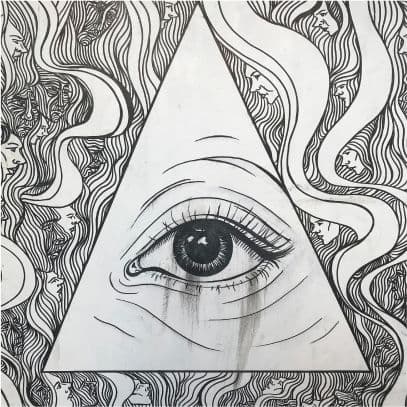
The dedicated eye cream is largely a packaging decision, sold in fifteen millilitres at four times the price per gram. The skin around the eye is genuinely thinner and genuinely more reactive, which argues for care in application rather than a separate product. What the evidence supports, and how long it honestly takes.
Text
Ines Halvorsen
Duration
9 mins